90s Nostalgia: Everyday Habits That Would Feel Unacceptable Today
If you grew up in the 90s, everyday life felt strangely loose and unsupervised. That wave of 90s nostalgia usually hits when you remember how normal things back then would feel awkward or even unacceptable today.
Not reckless exactly. Just free.
You left the house without a phone. Showed up at someone’s door without texting first. Waited a week to see how your photos turned out. Nobody tracked you, tagged you, or recorded you.
Recently, a wide public discussion asked a simple question. What did people casually do in the 90s that simply would not fly now?
The answers felt less like trivia and more like time travel.
Because so many of those everyday habits quietly disappeared.
And most of us did not even notice when they did.
Showing up unannounced
This might be the biggest social shift of all.
People used to just knock.
No “I’m outside.”
No “Are you free?”
No checking calendars.
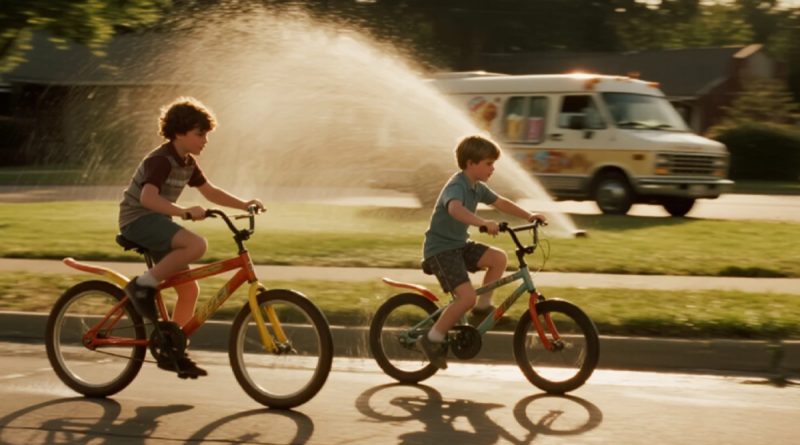
You walked or biked to a friend’s house, rang the bell, and asked if they wanted to hang out. If they were not home, you tried another house or came back later.
Some people remembered yelling a friend’s name from the yard until someone came out. Others said doors were often unlocked and friends simply walked in.
Today, that would feel intrusive or rude. We message first. Then we wait. Then we confirm again.
Back then, spontaneity was normal.
Plans happened in real time.
Being completely unreachable
If you left the house, you were just gone.
No location sharing.
No constant calls.
No instant replies.
Parents might have a rough guess about your neighborhood. That was it.
Many people talked about biking miles away, spending all day outside, or wandering between houses until sunset without anyone checking in.
Today that level of silence would cause panic.
But then, silence meant independence.
It meant you were living your day instead of reporting it.
That kind of freedom feels rare now.
Calling a place, not a person
Before mobile phones, you did not call someone directly. You called their home.
Which meant someone else answered first.
Usually a parent.
You introduced yourself. Made small talk. Asked if your friend was around. Sometimes you waited while they searched the house.
It sounds small, but it changed everything.
Conversations had a bit of effort built in. You could not instantly reach anyone at any time.
Long distance calls were expensive too. Many families waited until evenings or weekends when rates dropped.
Some people even used collect calls with coded messages just to avoid charges.
Today, communication is instant and private. Back then, it was slower and oddly more personal.
Smoking indoors everywhere
This one shocks younger generations the most.
Smoking used to be allowed almost everywhere.
Restaurants. Cafes. Malls. Arcades. Cars. Even airplanes at one point.
There were “smoking” and “non smoking” sections, often separated by nothing more than a sign or a few tables. The smoke drifted everywhere anyway.
Ashtrays sat on fast food tables. Families drove with the windows barely cracked in winter.
Now indoor smoking feels unthinkable.
But at the time, nobody questioned it. It was simply how public spaces worked.
Looking back, it feels like a completely different world.
Waiting for everything
Patience was part of daily life.
You waited to develop photos.
You waited for your favorite show to air at a specific time.
You waited for songs on the radio.
You waited for the TV guide channel to scroll back around.
Miss the show? Try next week.
Take a wrong turn while driving? Pull over and figure it out.
There was no streaming, no instant replay, no maps recalculating in real time.
People admitted it could be frustrating. But it also made things feel special.
When something finally happened, you paid attention.
There were fewer distractions competing for you.
Dancing and being silly without cameras
This one feels subtle but meaningful.
People used to dance, joke around, or be goofy without worrying it would live online forever.
At parties or weddings, nobody was secretly recording everything.
If you embarrassed yourself, it disappeared the next day.
Today, there is always a chance someone is filming.
That small possibility changes how people act. We self edit. We hold back.
Moments feel less private.
Back then, memories stayed in the room.
Kids roaming freely for hours
For many people, this is the heart of 90s nostalgia.
Kids just went outside.
Morning to evening.
No tracking apps. No scheduled playdates. No constant supervision.
You looked for the house with the most bikes on the lawn and joined whatever game was happening.
You rode miles. Explored creeks. Hung out at parks or parking lots.
Sometimes parents barely knew where you were.
Today, that kind of independence feels rare. Safety concerns are higher. Neighborhoods feel less communal. Public spaces are less welcoming to kids just hanging around.
In many ways, the world became safer and more connected.
But it also became tighter and more monitored.
And something about that loose, unplanned freedom quietly faded away.
So what really changed?
Reading through all these memories, a pattern becomes clear.
Life was slower.
Less documented.
Less optimized.
Less watched.
You had fewer conveniences, but more breathing room.
Today we have instant everything. Faster answers. Constant connection.
But we also carry more pressure to respond, perform, and be available at all times.
Maybe that is why these stories resonate so strongly.
They are not just about old technology or habits.
They are about a feeling.
A time when not everything needed proof.
When showing up was enough.
When disappearing for a day did not worry anyone.
And when normal life happened quietly, without an audience.
That is what many people really mean when they talk about 90s nostalgia.
Not just the decade.
But the freedom.
Discussion Context
This article reflects perspectives shared by redditors in a public discussion about everyday habits from the 1990s that feel unusual or unacceptable today.
Disclaimer
This article shares general opinions and experiences and is not professional advice.
